

What is Requesto?
Requesto is an open-source API client that runs locally on your machine or on your own server. It stores everything in plain JSON files - no cloud, no accounts, no telemetry.
You can run it as a desktop app (Electron), in Docker, or straight from source.
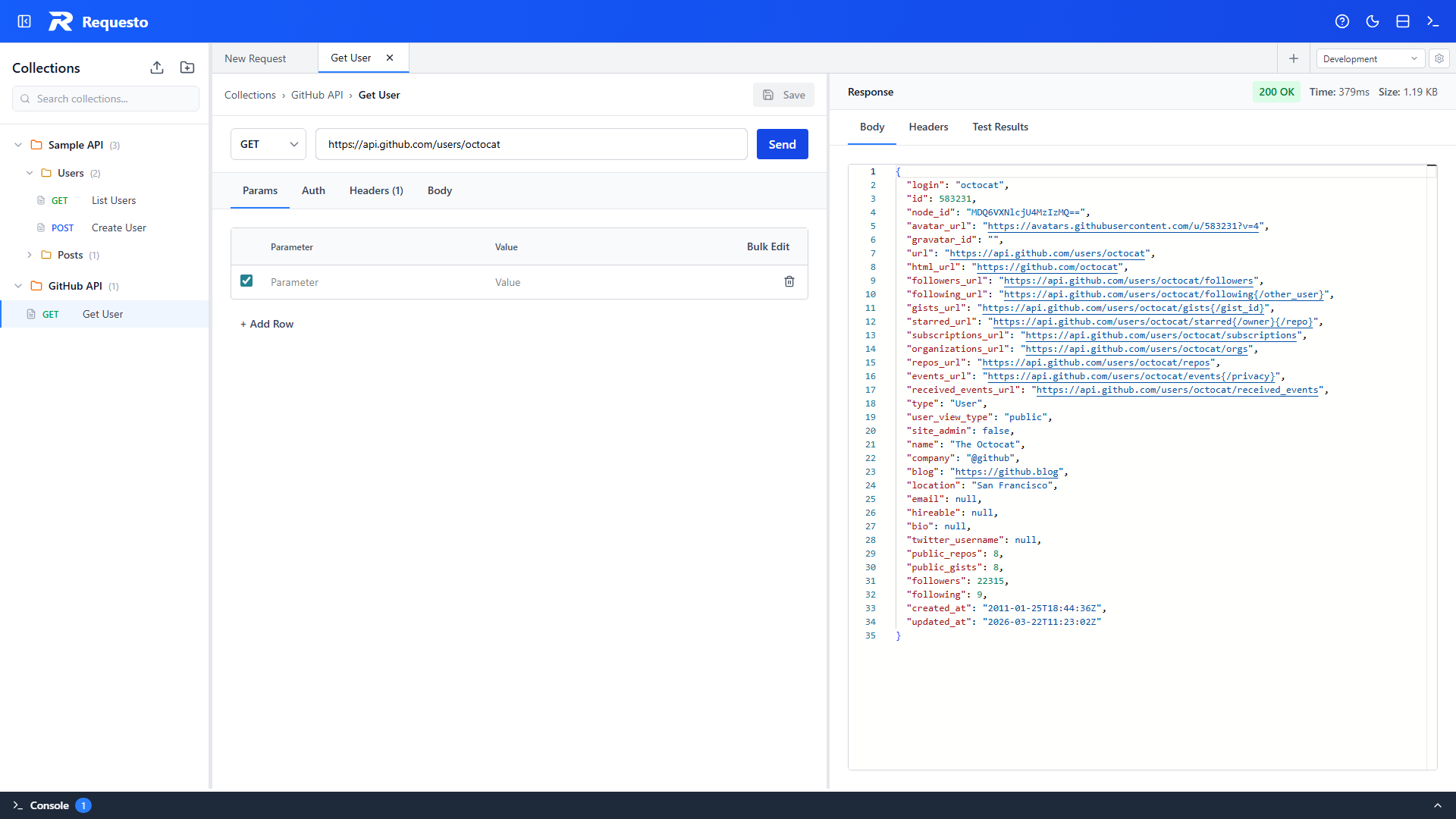
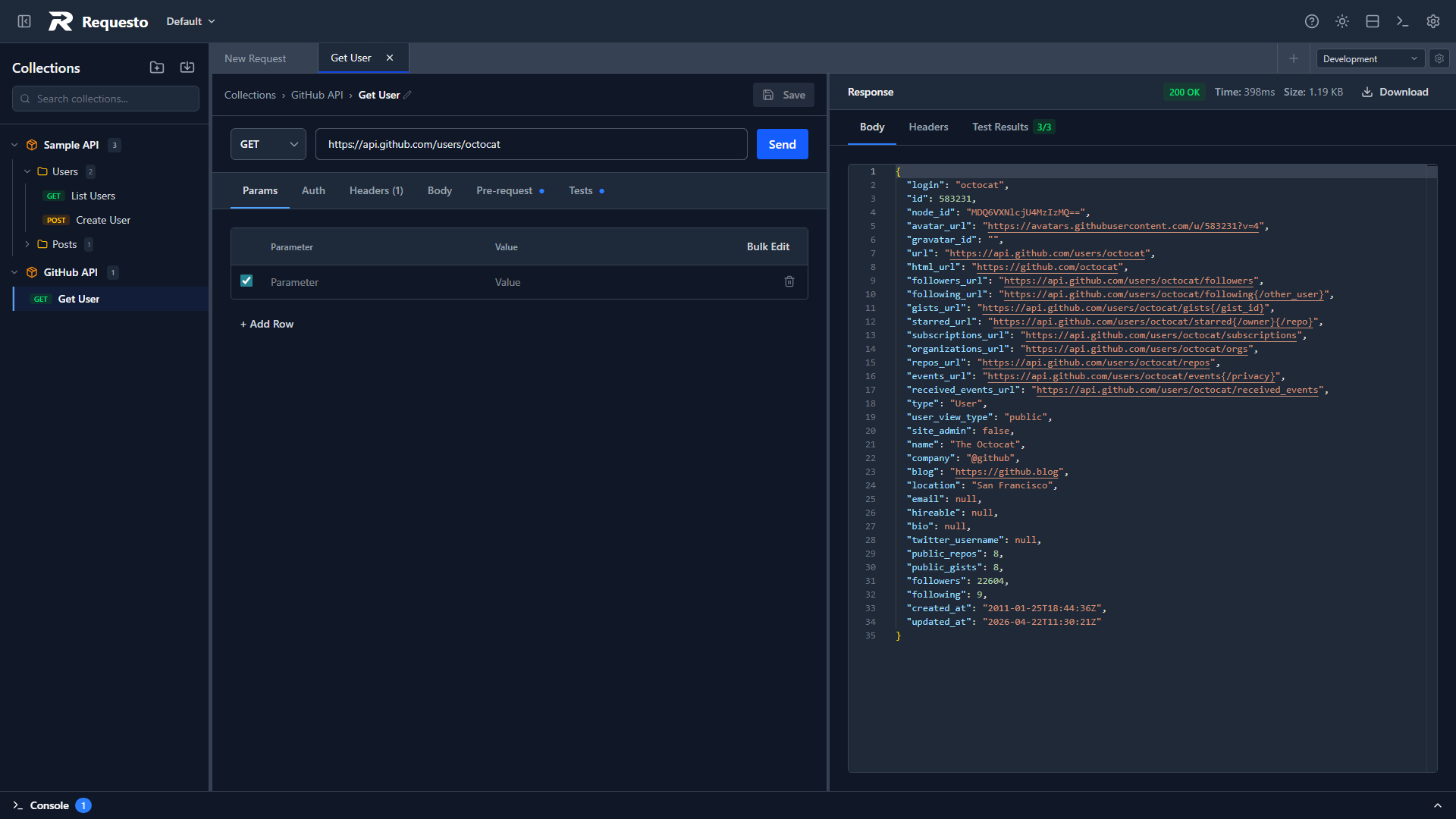
What it does
- Send HTTP requests (GET, POST, PUT, PATCH, DELETE, HEAD, OPTIONS)
- Query GraphQL APIs with a schema explorer, introspection, and saved schema profiles
- Mock APIs with a built-in mock server, using static responses or dynamic CRUD endpoints backed by a dataset
- Organize requests into collections and folders with drag-and-drop
- Define environment variables and swap between them (dev, staging, prod)
- Authenticate with Basic, Bearer, API Key, Digest, or OAuth 2.0
- Import OpenAPI v2/v3 specs and keep collections in sync as the spec changes
- Import and export collections and environments
- Manage multiple workspaces to isolate different projects
- Version control workspace data with built-in git integration
- Stream Server-Sent Events (SSE)
- View request/response logs in a built-in console panel
- Write pre-request scripts to set environment variables before each request
- Write test scripts to assert response status, body, headers, and timing
- Run all requests in a collection or folder sequentially with the collection runner
The backend handles CORS, substitutes environment variables, and manages all data storage so the frontend never has to deal with cross-origin restrictions or file I/O.
How it's built
Frontend (React/Vite) ←→ Backend (Fastify) ←→ External APIs
        ↓
Electron Wrapper (Desktop)- Frontend: React, TypeScript, TailwindCSS, Zustand for state management
- Backend: Node.js with Fastify - manages collections, environments, workspaces, git operations, OpenAPI importing, request execution, and OAuth token exchange
- Desktop: Electron wrapper that bundles the backend as a child process
- Storage: JSON files on disk organized by workspace. No database.
data/
├── workspaces.json        # Workspace registry and active workspace
├── Default/               # Built-in workspace (named "Local Workspace")
│   └── .requesto/         # Requesto data for this workspace (git-tracked)
│       ├── order.json     # Display order of collections, environments, and configs
│       ├── collections/   # One JSON file per collection (folders and requests included)
│       ├── environments/  # One JSON file per environment and its initial variables
│       ├── oauth-configs/ # One JSON file per OAuth configuration (no client secrets)
│       ├── mock-endpoints/ # One JSON file per mock server endpoint
│       └── local/         # Local-only data (excluded from git)
│           ├── history.json
│           ├── oauth-secrets.json
│           └── mock-data/ # Dynamic mock server datasets
└── workspaces/            # Additional workspaces (created or git-cloned)
Data writes use a temp-file + rename pattern to avoid corruption. Storing each collection in its own file keeps git diffs small and merge conflicts rare.
Why it's built this way
The goal is to be easy to self-host. Whether you run it as a desktop app or deploy it in Docker, there's no database to set up or maintain - just JSON files in a data directory. Back up by copying a folder, restore by putting it back.
Each workspace is its own directory, so different projects stay isolated. Workspaces that are git repositories can be committed, pushed, and pulled directly from the UI, making it straightforward to share API collections across a team without any external sync service.